
How to Support Your Mental Health in Motherhood: Proactive Strategies for Emotional Wellbeing and Mental Health After Birth
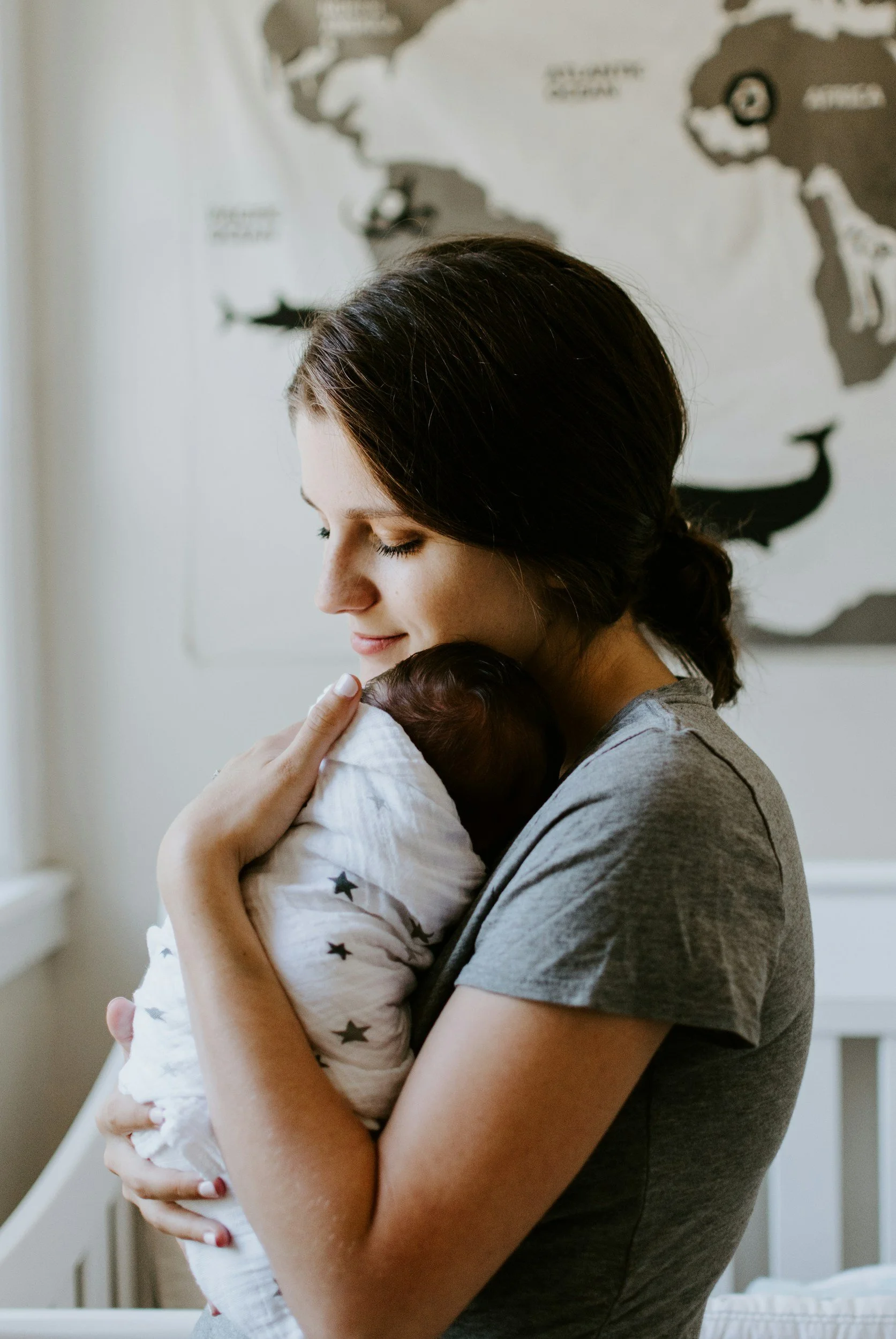
Becoming a mother is one of the most all-encompassing identity shifts a human being can experience. It is a transformation in every dimension of your being: your biology, your body, your sense of self, your relationships, and the quiet interior life you have always known as yours.
There is a word for this: matrescence, the developmental process of becoming a mother. Just as adolescence reshapes who we are, so does motherhood. And just like adolescence, it is not always graceful or comfortable. It is often disorienting, tender, and profoundly beautiful all at once.
In the midst of this transformation, your emotional wellbeing matters - not as a luxury, but as a clinical necessity. We are sharing evidence-based, compassionate strategies to help you care for your mental health in the postpartum period and beyond.
The Full Spectrum of Feelings
Motherhood is filled with enormous feelings that often seem to pour through you - and that is not a sign that something is wrong. It is a sign that you are human, and that hormonal and neurological shifts are doing exactly what they are designed to do.
Some of what you feel will be joyful: love, gratitude, wonder and connection.
And some of what you feel will be uncomfortable, confusing, or even frightening. These feelings are also typical and they deserve gentle, compassion and attention. Many new mothers experience:
Anxiety
Crying spells
Guilt
Anger
Irritability
Exhaustion
Loneliness
If you are experiencing any of these - you are not alone, and you are not broken. These are among the most common postpartum experiences. What matters is that you have support around you so none of it has to be carried alone.
Protecting Your Sleep
Sleep is incredibly important in the postpartum period and as much as possible should be prioritized. Sleep deprivation significantly amplifies anxiety, emotional dysregulation, and depression. Protecting your sleep is one of the most impactful things you can do for your mental health right now.
For two-parent households: Make a plan to divide overnight care into 4–5 hour chunks so each of you gets at least one stretch of uninterrupted sleep. Even a few nights a week of consecutive sleep can make a meaningful difference in your emotional regulation and resilience.
For single-parent households: Call on your village - a trusted aunt, a close friend, your own mother - and ask for help so you can sleep. If it is financially accessible, a postpartum doula or night nurse can be a game-changing investment in your recovery.
Create conditions for rest: When it is your turn to sleep, treat it like a sacred appointment. Consider earplugs, a white noise machine, soft music, an eye mask, or sleeping in a separate room so your body can fully come down.
Asking for help can be so hard but it is an incredibly important choice you can make for your baby's wellbeing as well as your own.
Nourishing Yourself as an Act of Care
Food is medicine in the postpartum period. Nutrient depletion after birth is real, and what you eat directly affects your mood, energy, and hormonal recovery. Try shifting the way you think about eating - from a task to a tender act of self-care.
Ask yourself: If my best friend were postpartum, how would I want her to eat? What would I bring her? Then apply that same care to yourself.
Set up a breastfeeding station: If you are nursing, create a station on each level of your home stocked with a large water bottle, nourishing snacks, a feeding pillow, burp cloths, and headphones. You should never have to choose between feeding your baby and feeding yourself.
Make your comfort food list now: Write down your favorite restaurants, favorite dishes, and favorite comfort foods before the haze of early newborn days sets in. Keep it somewhere easy to find so that you or someone who loves you can quickly order delivery without a single decision having to be made.
Prioritize warmth and nourishment: Many traditional postpartum cultures emphasize warm, easy-to-digest, nutrient-dense foods like soups, stews, oatmeal and root vegetables. Connect with nourishing food that you know brings you feelings of warmth and care. There is wisdom in this. Your body just did something extraordinary. Feed it accordingly.
Building Your Village
The phrase it takes a village is not a cliché - it is a neurobiological reality. Human mothers are not designed to raise children alone, and the isolation that modern life often imposes on new mothers is one of the key contributors to postpartum suffering.
Think intentionally about who your people are - and what specific things they can do to support you. Most people genuinely want to help and simply need to be told how.
Your village can help with:
Organizing a meal train
Doing baby's laundry
Washing and sterilizing bottles
Light housekeeping
School or sibling pickup and drop-off
Grocery runs
Walking the dog
Holding the baby so you can sleep
Give specific, concrete asks. "Can you come over Tuesday from 10am to 1pm so I can sleep?" It is far easier for someone to say yes to that than a general "Let me know if you need anything."
Finding your Mom Community
One of the most consistent findings in perinatal mental health research is that social connection is protective. Loneliness in early motherhood is extraordinarily common - and extraordinarily painful. Finding even one other mother who truly gets what you are living through can be profoundly healing.
Consider connecting with local mom groups and communities where you can find your people in real time:
Local hospital new parent groups
Online communities can also bridge the gap during those 3am feedings when no one else is awake. Postpartum Support International (PSI) offers a 24/7 helpline and peer mentor program that connects you with a mother who has been through a similar experience and comes out the other side. You can reach them at 1-800-944-4773. They also offer a significant amount of online free support groups for a variety of different groups and populations.
Nurturing Yoursel
Finding time for yourself in early motherhood can feel laughably impossible. Just consider: what is one small thing that helps you feel like yourself? Self-care in the postpartum period is not indulgence - it is maintenance. It is keeping the person at the center of your family alive and present. Even five minutes counts.
Some ideas to return to when you need them:
A warm bath with essential oils
Calling someone you have been missing and really want to connect with
A walk outside in fresh air - even ten minutes can help with regulating your nervous system
A massage (you have earned it)
A podcast that makes you laugh or that you find genuinely absorbing
A hot drink, uninterrupted
Ten minutes of reading something you chose for yourself
Music that moves you
Writing in a journal
Fresh flowers somewhere in your home
You do not have to earn rest. You do not have to earn joy. These are not rewards for surviving, they are fuel for living.
Reaching Out for Professional Support
All of the strategies above are meaningful and important. And sometimes for many mothers they are not enough on their own. That is not failure. That is information.
If you are experiencing persistent sadness, anxiety that will not quiet, intrusive thoughts, rage that feels out of proportion, difficulty bonding with your baby, or any experience that feels like it is getting in the way of your life - please reach out to a perinatal mental health specialist.
Perinatal mental health conditions are among the most common complications of pregnancy and birth, affecting up to 1 in 5 mothers. They are also among the most treatable. You do not have to white-knuckle your way through this.
Engaging in therapy with a clinician who specializes in the perinatal period means working with someone who understands the complexity of what you are navigating - not just as a clinical presentation, but as a human experience. Our therapists have specialized training and experience supporting individuals through pregnancy, postpartum, and the full reproductive journey.
You deserve support too.
Reach out today to schedule a free phone consultation and find out more about how we can support you.
If you are in crisis or need immediate support, please contact Postpartum Support International at 1-800-944-4773 or text HOME to 741741 to reach the Crisis Text Line.